11 Warning Signs Watermelon Is No Longer Safe To Eat
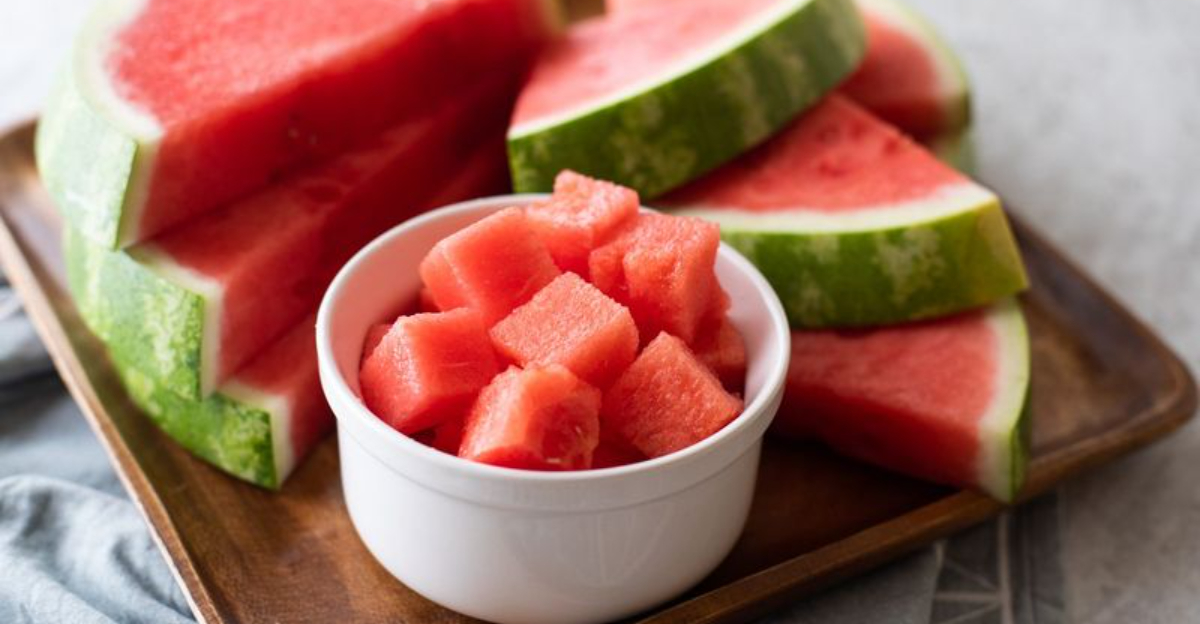
Summer’s juiciest treat can turn from delicious to dangerous faster than you might think. Watermelons don’t come with expiration dates stamped on their rinds, leaving us to decode their freshness through observation.
Knowing when to toss that big green fruit could save you from an unpleasant bout of food poisoning or a seriously disappointing fruit salad experience.
1. Funky Fermentation Smell
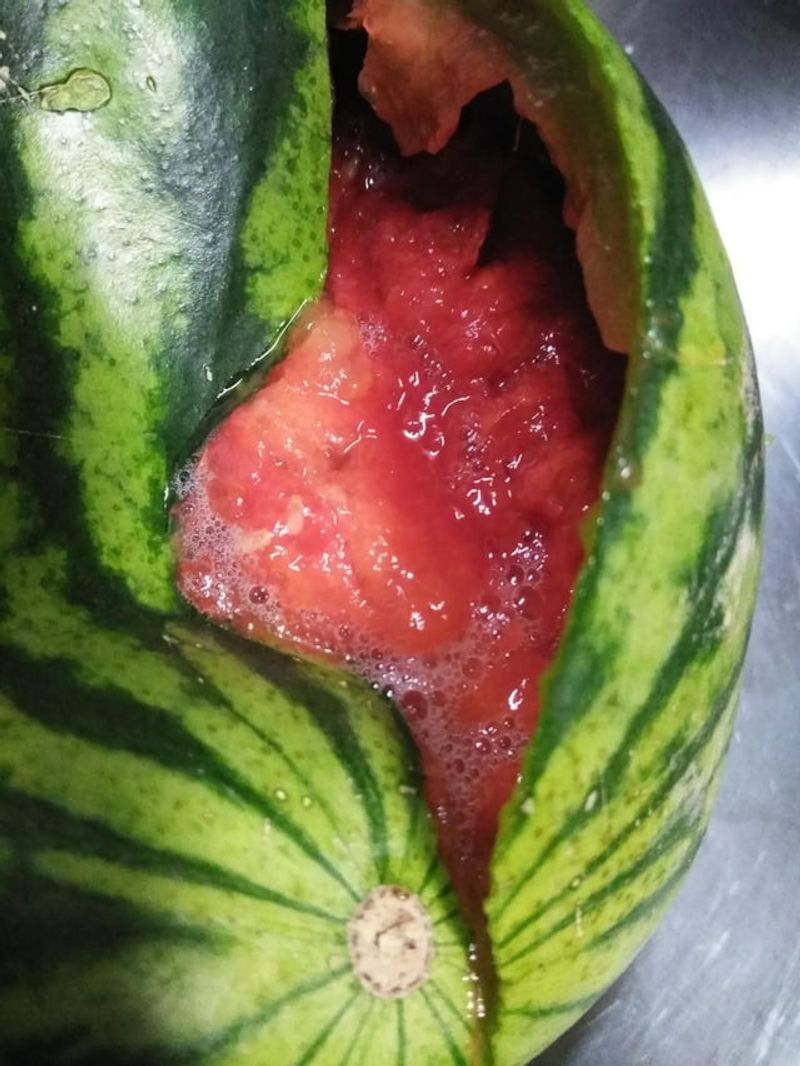
Hold up! That whiff of alcohol or vinegar isn’t your imagination. When watermelons start fermenting, they release a distinct sour-sweet boozy aroma that screams “I’ve gone bad!”
The fermentation process produces compounds that can upset your stomach and potentially harbor harmful bacteria. Trust your nose on this one – if it smells like something you’d mix with tonic water, it belongs in the trash, not your mouth.
2. Slimy Texture
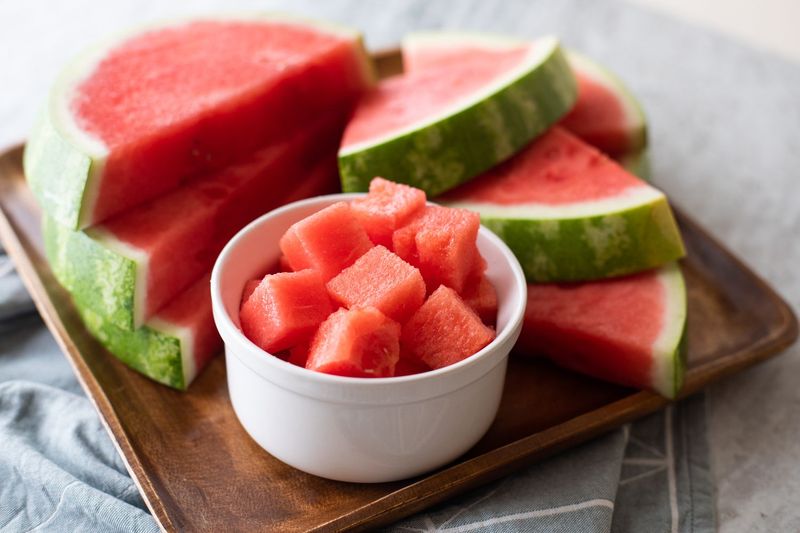
Grab a napkin! Perfectly ripe watermelon flesh should feel firm yet crisp, never slippery or gooey. When that once-crisp interior transforms into a slimy mess, bacteria have started their takeover party.
The breakdown of cell walls creates that unsettling texture that slides between your fingers. This sliminess indicates advanced decomposition and potentially dangerous bacterial growth.
3. Hollow Knocking Sound

Rap your knuckles on that big green oval! A fresh watermelon responds with a deep, resonant thump. But when knocking produces an unusually hollow or flat sound, your melon has likely dried out from the inside.
While not immediately dangerous, this hollow-sounding melon will disappoint with dry, mealy flesh that’s lost its juicy appeal. The texture change also signals the beginning of quality decline that will accelerate quickly.
4. Cracks Revealing Dark Secrets
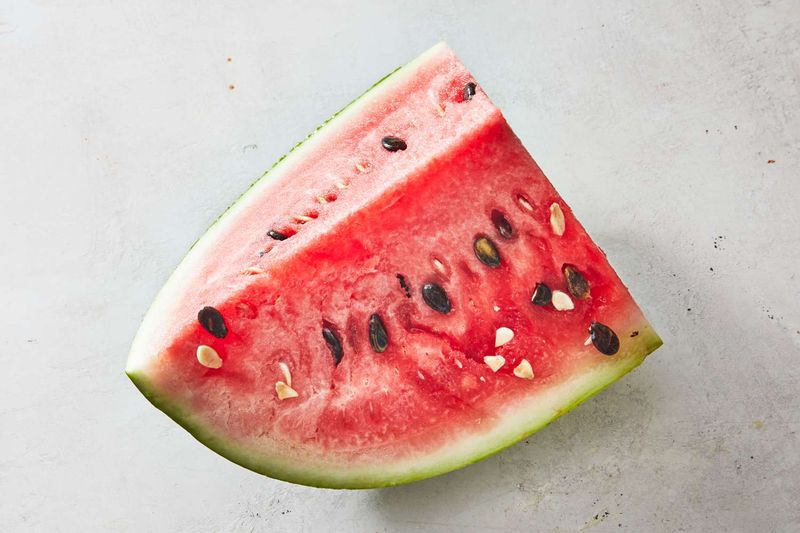
Yikes! Those cracks in your watermelon’s armor aren’t just cosmetic flaws. Splits and fissures in the rind create superhighways for bacteria, mold, and other contaminants to invade the vulnerable flesh inside.
Once breached, the watermelon’s natural protective barrier fails, allowing pathogens to feast on the sugary interior. These cracks often develop from improper handling or temperature fluctuations.
5. Color Transformation
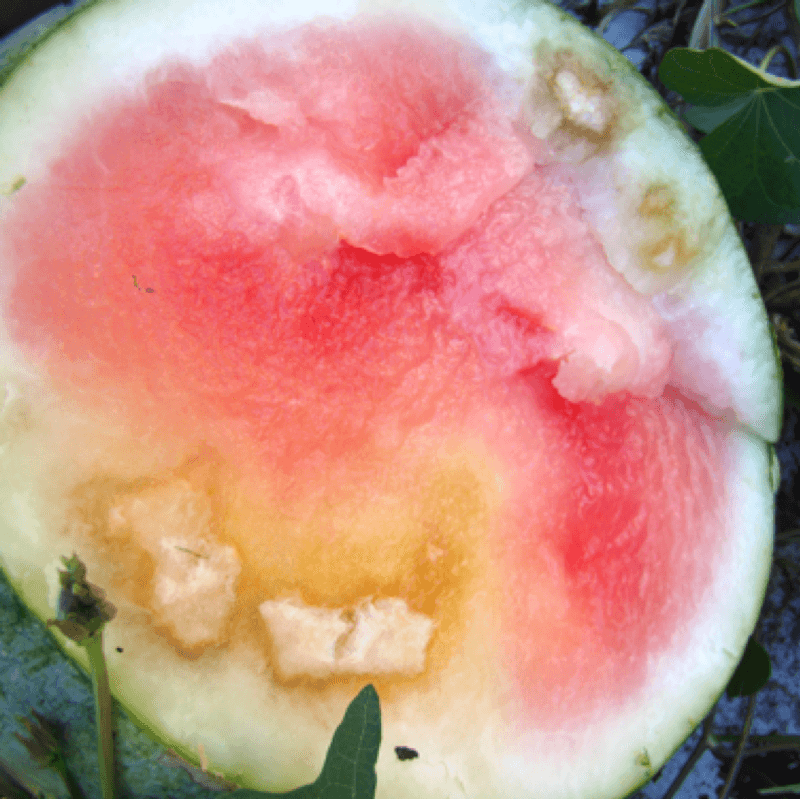
Screaming red has faded to pale pink? Your watermelon is waving the white flag of surrender! The vibrant color of fresh watermelon comes from lycopene, which degrades as the fruit ages and oxidizes.
When that bright red interior dulls to pink, orange, or even brownish tones, chemical changes are actively destroying both flavor and nutritional value. The color shift often starts at the rind and works inward.
6. Mold’s Fuzzy Invasion
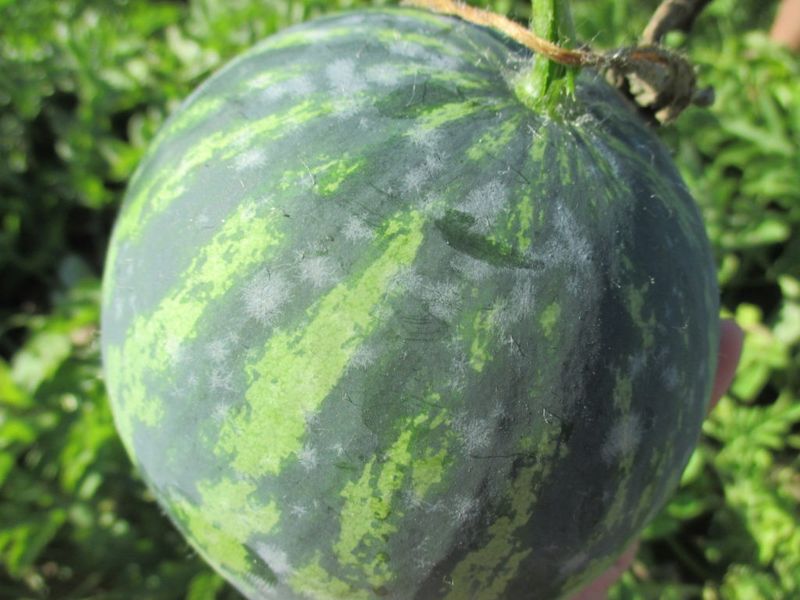
Spotted fuzzy patches? Run for the hills! Mold on watermelon appears as white, gray, black, or even blue-green spots that can start microscopically small before exploding into visible colonies.
These fungal invaders produce mycotoxins that can cause serious illness, especially for those with compromised immune systems. Don’t be fooled into thinking you can just cut away the moldy parts!
7. Juice Leakage Warning
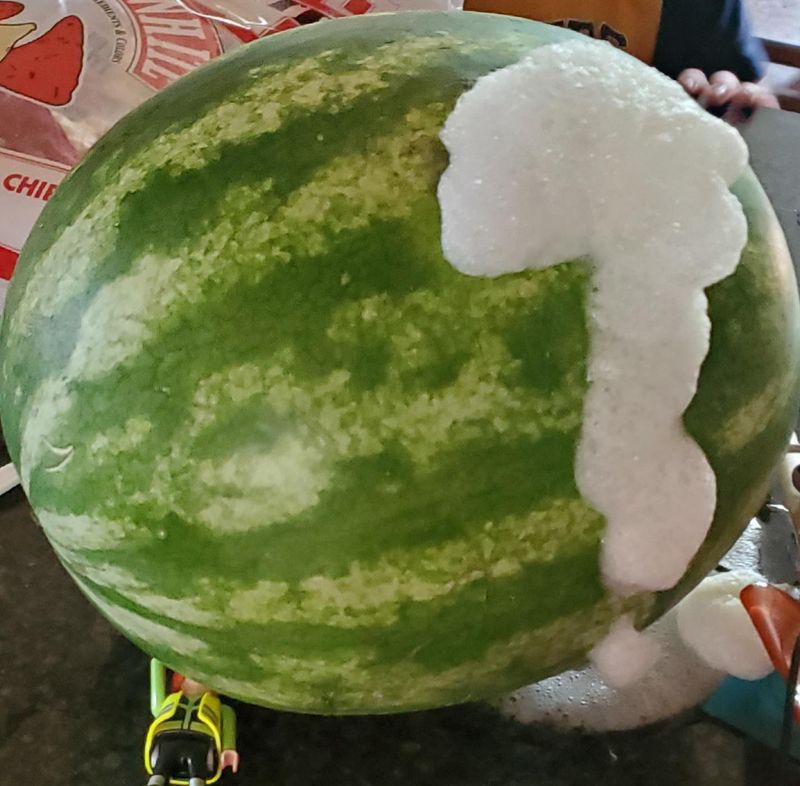
Mystery puddle under your watermelon? Major red flag! When watermelons begin leaking juice without being cut, their cell structure is breaking down from the inside out.
This spontaneous weeping occurs when internal pressure builds from gas-producing bacteria or when cell walls rupture from decomposition. The leaked juice creates a perfect breeding ground for additional bacteria on your counter or in your fridge.
8. Seeds Staging A Jailbreak
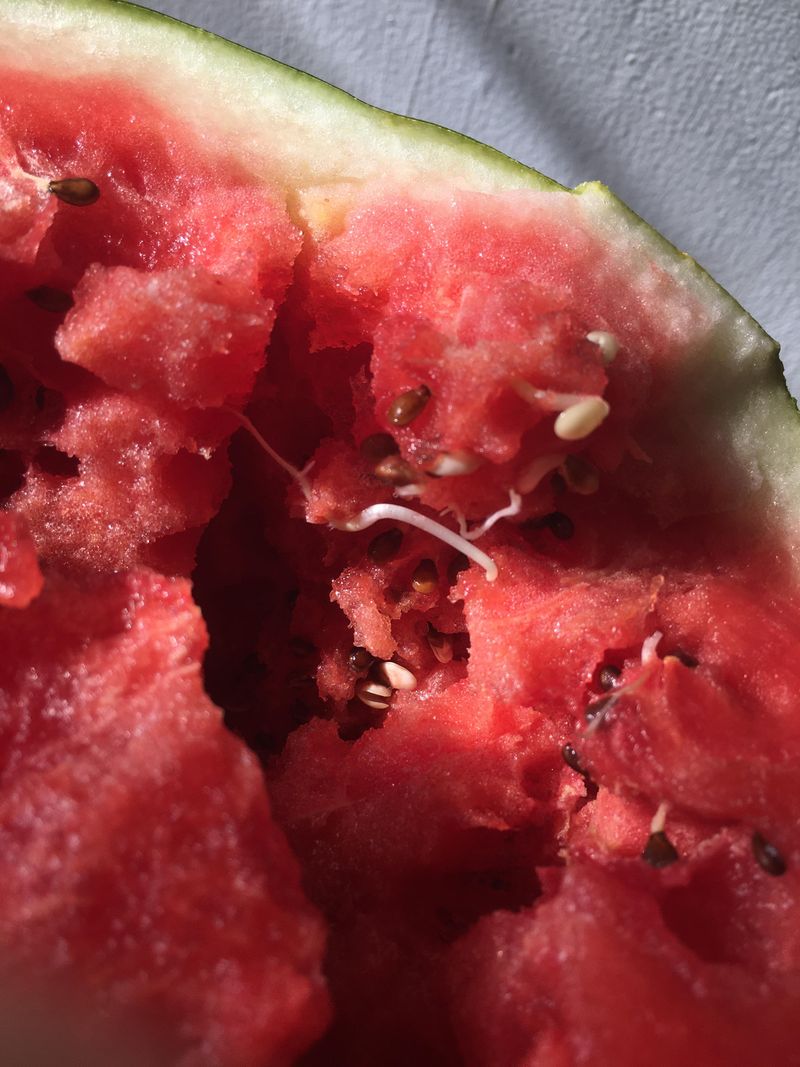
Seeds sprouting inside your watermelon? That’s fruit rebellion in action! When seeds germinate within an intact watermelon, it signals the fruit is well past its prime and actively decomposing.
The seed’s protective coating has broken down, and the embryo inside has detected enough moisture and deterioration to trigger growth. These tiny white sprouts are the seed’s attempt to escape its rotting prison.
9. Dented Soft Spots
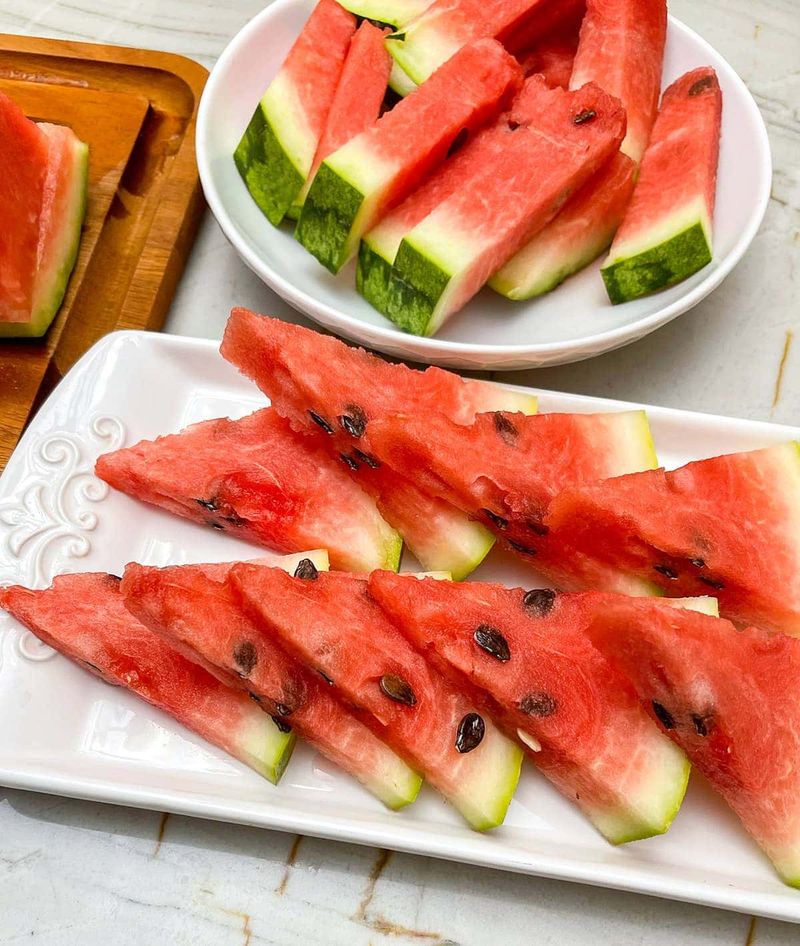
Poke that suspicious depression! Healthy watermelons maintain consistent firmness across their entire surface. When soft, sunken areas develop, they reveal internal tissue breakdown happening beneath the rind.
These dents often feel spongier than the surrounding area and may yield too easily to finger pressure. The damage typically starts from impact bruising that ruptures internal cells, creating perfect bacterial breeding grounds.
10. Rind Pattern Distortion
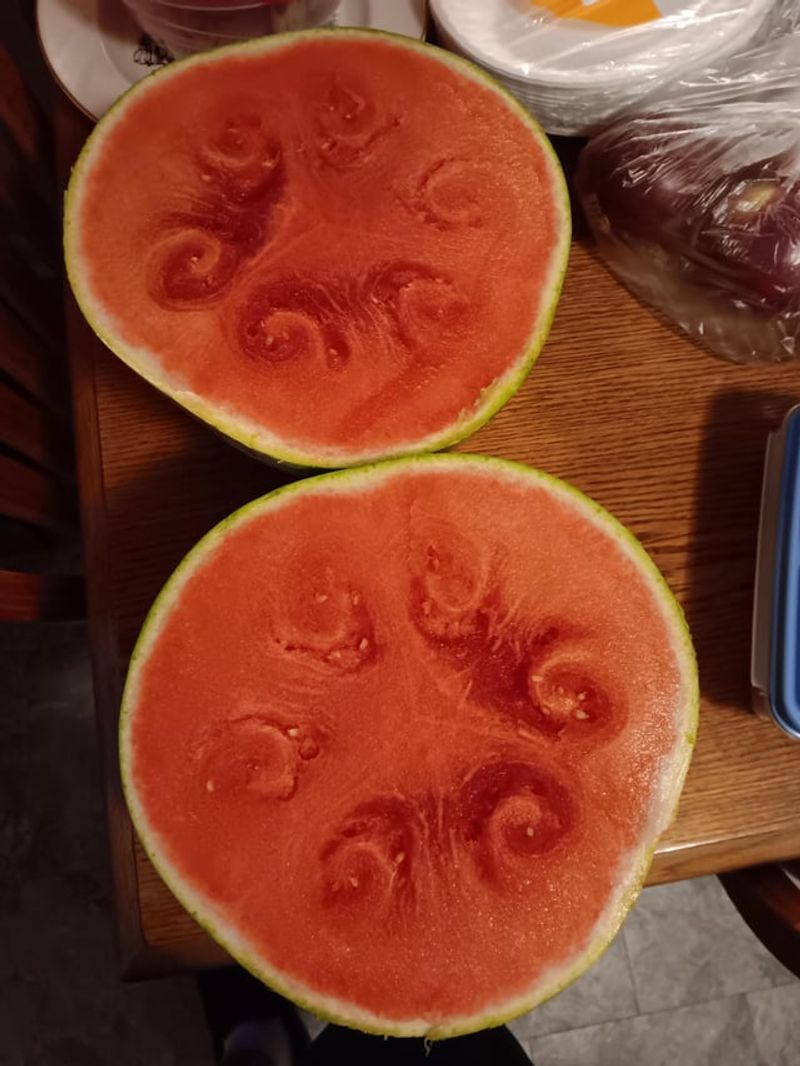
Those classic stripes gone wild? Not artistic expression – it’s deterioration! A fresh watermelon displays consistent, well-defined striping patterns on its rind. When these patterns become distorted with irregular discolorations or the green fades to yellow-brown, decay has begun.
The chlorophyll breaking down causes this color shift, often accompanied by a waxy or dull appearance replacing the natural slight shine. Look especially for patches where the pattern seems to “melt” or blur.
11. Bizarre Fizzing Sensation
Carbonated watermelon? Unless you’ve invented a revolutionary summer treat, that fizzy feeling on your tongue means trouble! The bubbling sensation comes from carbon dioxide released by fermenting yeasts and bacteria munching on your melon’s sugars.
This effervescence might seem fun – like natural fruit soda – but it’s actually a serious warning sign of advanced decomposition. The microorganisms responsible can include harmful pathogens that produce toxins alongside those innocent-seeming bubbles.